Why I read four systems and not one
In short: Human Design, Western astrology, Ba Zi and numerology each look at the same person from a different angle. Astrology describes your character and inner life, Ba Zi the balance of elements in you and the timing of your life, numerology the road you’re on and the theme of each year, and Human Design how you’re built to use your energy and make decisions. Read on its own, each system tells you something true but partial. Read together, the places where they agree become hard to ignore, and that agreement is the most reliable part of any reading.
For years I had a shelf of notebooks. One for astrology, one for numerology, one for Ba Zi. Every January I would sit down with a pot of tea and work through each of them, for myself and for the people I love. And every year I closed the notebooks with the same feeling: each one had told me something true, and none of them had told me everything.
It took me a long time to try the obvious thing, which was to open all of them on the same table at the same time. When I finally did, and added Human Design to the pile, I understood what had been missing. The systems were never meant to compete. They are four different instruments looking at the same person.
Why use more than one system?
Think of a doctor who listens to your heart, takes your blood pressure and looks at your skin. Nobody would say the stethoscope is wrong because it can’t see a rash. Each instrument is built to notice certain things and miss others.
It’s the same with these four. Astrology is rich and subtle, but it can describe so many layers that people get lost in them. Numerology is clear and quick, and sometimes too broad to explain the details. Ba Zi is precise about timing and elements, and its vocabulary feels foreign to most Europeans. Human Design is wonderfully practical about daily life, and says less about the long arc of the years.
Put them side by side and their weaknesses start to cancel out. Where one is vague, another is sharp. Where one is unfamiliar, another says the same thing in words you already know.
What does each system look at?
Here is what each one brings to the table, and what it needs from you.
Western astrology is the one most people have met. Your natal chart is a map of the sky at the moment you were born: where the Sun, the Moon and the planets stood, and in which area of life each one falls. It is wonderful for character and for the inner life. Your Sun sign is only the first line of it. Your Moon describes what you need to feel safe, and your rising sign how you walk into a room.
Beyond those three, each planet has its own job. Mercury shows how you think and talk, Venus what you love and find beautiful, Mars how you go after what you want. The twelve houses show where in your life all of this plays out: work, home, love, money, friendship. Astrology needs your date, time and place of birth.
Ba Zi (八字), the Chinese four pillars, uses your year, month, day and hour of birth. Each of the four pillars has two characters, which gives eight in all, and “Ba Zi” simply means eight characters. They describe the balance of the five elements in you: wood, fire, earth, metal and water. The element of your day, called your Day Master, is you.
Ba Zi is the system I trust most for timing. It divides your life into ten-year chapters and tells you what kind of weather each one brings. It also shows which elements support you and which ones wear you down, which turns out to be very practical when you’re choosing how to work, rest or plan a year. It’s the same five elements that sit behind Chinese medicine and Feng Shui, applied to a person rather than a body or a house.
Numerology works with your date of birth and your name. Your life path number, taken from your birth date, describes the road you’re on. The numbers in your name describe what you want deep down and how others see you. It is the simplest of the four and often the most direct. People recognise themselves in two sentences.
Numerology also keeps time. Each calendar year gives you a personal year number from 1 to 9, with its own theme: beginning, patience, building, letting go. It needs no birth time at all, only your date of birth and your full name as it was given to you.
Human Design is the youngest. It appeared in 1987 and brings together astrology, the Chinese I Ching, the chakras and the Kabbalah in one chart called a bodygraph. Its gift is practical. It tells you which of five types you are and how you, specifically, are built to use your energy and make decisions.
For many people this is the piece that changes daily life, because it gives them permission to stop doing things the way everyone else does. Someone who has spent years forcing long, even working days may discover they are built for bursts of focus and real rest in between. Like astrology, Human Design needs your date, time and place of birth.
What happens when you put them together?
Here is the kind of pattern I mean. Imagine a woman who comes with one question: why is she so tired when she is doing everything right? Her Human Design says she is not built to work in long, steady stretches. Her Ba Zi shows an element that is being drained by too much output. Her astrology has a Moon that needs solitude to recover. Her numerology shows a year meant for rest and reflection. Four systems, four vocabularies, one message.
If she had heard it from one system, she might have shrugged. Heard four times, from traditions born in different centuries on different continents, it is hard to ignore. That agreement is what I call convergence, and it is the heart of every reading I do.
Convergence also keeps me honest. Any single system, read with enthusiasm, can be made to say almost anything. When four of them point the same way, I know I’m not projecting my own ideas onto someone’s chart. And when only one of them says something, I mention it more lightly.
What if the systems disagree?
That is just as interesting. Someone can be bold on paper in astrology and cautious in Ba Zi. That person is usually both, in different parts of life, and has spent years feeling contradictory. Seeing it written down is a relief.
A disagreement is rarely a mistake. More often it shows a tension that the person already lives with: the side of them that wants freedom and the side that wants security, or the public self and the private one. Each system catches a different part of it. My job is to show where each part lives, so it stops feeling like a flaw and starts looking like a range.
Sometimes the difference is about timing rather than character. A person’s numerology might call for a year of beginnings while their Ba Zi says the current ten-year chapter favours patience. Both can be true at once: a small, careful start inside a slower decade.
Isn’t it a lot of information?
It would be, if I simply handed you four charts. What I do instead is look for the threads that run through all of them, and lead with those. A reading is organised around you and your questions, not around the systems. You’ll hear about your energy, your work, your relationships and your timing, and for each one I tell you which systems are speaking and how strongly they agree.
Most people come away with three or four sentences they remember for years. The details are there in writing when they want to go back to them.
Do you need to know any of this beforehand?
No. You don’t need to know your rising sign or what a Day Master is. I do the calculations from your date, time and place of birth, and I explain each system in everyday words as we go. Your part is to listen and notice what sounds like you.
A few things help, if you have them:
Your birth time, as exact as you can find it. If you don’t know it, tell me what you do know, and I’ll say clearly which parts of the reading depend on it.
Your full name at birth, as it appears on your birth certificate, for the numerology.
One question you care about. It doesn’t need to be clever. “Why do I keep ending up in the same kind of job?” is a perfect starting point.
Frequently asked questions
Which is more accurate, Human Design or astrology?
Neither, because they answer different questions. Astrology is richer on character and the inner life, while Human Design is more practical about energy and decisions. I find each one most convincing when the other says the same thing in its own words.
Is Ba Zi the same as the Chinese zodiac?
No. The Chinese zodiac animal is the branch of your birth year, which is one character out of eight. Ba Zi reads all eight, and puts the element of your birth day at the centre of the chart.
Do I need my birth time for all four systems?
Not for numerology, which uses only your date of birth and your name. Astrology, Human Design and Ba Zi all use the time, but much of each chart can still be read without it, as long as I tell you which parts I’m leaving out.
Can these systems predict my future?
Not in the sense of naming events. They describe the kind of season you’re in and what it favours, which is often more useful than a prediction. What you do with that season is up to you.
Where should I start if I’m new to all of this?
Start with a summary of all four, so you can see which one speaks to you most. Many people are drawn first to Human Design for daily life, then come back to astrology and Ba Zi when they want more depth.
Would you like to see your own four charts side by side?
If you’re curious, start with the free summary reading. In around 8 pages it shows you who you are in each system and where they agree.
When you want the whole picture, the personal reading goes through all four with you on a call and in writing. You can compare the readings to see which one suits your question.
Not ready for the full reading yet? Start with the free summary and see how it speaks to you.
About Catherine
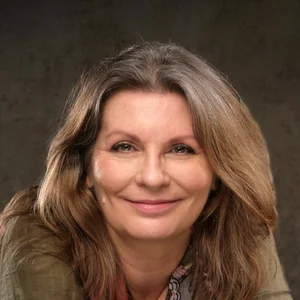
I’m Catherine Polet. I’ve read Western astrology, numerology and Ba Zi for many years, and Human Design completed the set. I’ve also taught yoga and autogenic training for more than thirty years, and I’m a holistic nutrition health coach. I write every reading myself, one person at a time, in English, French, Spanish or German, from my home in Southwest France. Read my story.